


Beliefs Are Not Truth Either: The Invisible Defaults Behind the Stories Under Your Emotions
How beliefs, language, and emotional granularity shape what your brain constructs
In my previous article, I shared a line that many people find both relieving and unsettling:
An emotion is not a fact about the world. It’s a meaning your brain is constructing.
If you’ve ever thought, “OK, I get it… so why do I still react the same way?”, you’re not alone :)
Because even when we understand that emotions aren’t ‘truth’, we can still find ourselves having the same emotional spikes again and again — in meetings, in friendships, at school gates, in job interviews, or in the quiet moments when we’re scrolling and comparing.
That’s usually a sign there’s a deeper chapter underneath the one we can see.
The last post was about the moments you notice — the hesitation, the overthinking, the second-guessing. This one is about what those moments are usually protecting: a belief you learned somewhere along the way.
Beliefs: the invisible defaults under your emotions
Beliefs are often invisible defaults.
They sit under the surface of your day like an operating system: quietly shaping what you pay attention to, what you interpret as ‘danger’ or ‘proof’, and what your brain predicts will happen next.
And to be clear: we all need beliefs.
Without them, you’d have to consciously evaluate every single situation from scratch. Beliefs help your brain conserve energy, make quick meaning, and decide what to do next.
The issue isn’t that you have beliefs.
The issue is that some of your defaults were built in a different context — and they may no longer be helpful in the life you’re living now.
Where beliefs come from (and why they feel like facts)

Most beliefs don’t arrive as a formal statement. They form gradually, through repetition.
They’re shaped by things like:
early experiences (what was rewarded, what was criticised, what felt safe),
family and cultural norms (spoken and unspoken rules),
school and work environments (how success was defined; what mistakes ‘meant’),
identity and belonging (what you learned you needed to do to be accepted),
stressful or high-stakes moments (when your brain links a feeling with a conclusion).
Over time, a belief can start to feel like reality.
Not because it’s objectively true, but because it’s familiar — and because your brain has used it as a reliable shortcut before.
A quick science note: emotions are constructed, not discovered
In How Emotions Are Made, neuroscientist Lisa Feldman Barrett argues that emotions are constructed by the brain.
Your brain uses:
sensations in your body,
the context you’re in,
and the concepts you’ve learned,
…to make a best guess about what’s going on and what you should do next.
That means your emotional experience is not a simple read-out of the world.
It’s an interpretation.
And here’s where beliefs matter: beliefs influence the interpretation your brain is most likely to make.
If the default belief is “It’s not safe to make mistakes here”, your brain is more likely to construct anxiety in situations that involve visibility.
If the default belief is “I’m behind”, your brain is more likely to construct shame in situations that involve comparison.
Concepts, language, and why living across cultures can amplify everything
Barrett also highlights the role of concepts — the categories your brain uses to make sense of sensations and context.
Concepts are learned. They’re shaped by experience, culture, and crucially, language.
So when you live across cultures (and often across languages), you’re not only adapting to new norms.
You may also be adapting to a new emotional vocabulary — which can subtly change what your brain constructs in the first place.
Sometimes the shift looks like:
using different words for the same inner experience,
noticing that one language has more precise labels for certain feelings,
realising you’ve been labelling a whole range of sensations as “stress” because it’s the closest concept you have available...
Emotional granularity: learning more precise concepts for what you feel
There’s a term for building a more nuanced emotional vocabulary: emotional granularity.
In simple terms, it means getting better at distinguishing between similar-feeling states (for example: irritation vs disappointment vs overwhelm), rather than putting everything into one bucket like “anxiety” or “stress”.
Why it matters: when you have more precise concepts available, your brain can make more precise predictions — and you often get more choice in how you respond.
If you’ve read my article where I talk about the Feelings Wheel, you’ll recognise this as one of the practical reasons that tool can be so helpful.
Three common invisible defaults I see in international professionals
Below are a few beliefs that show up often in my work with expats and international leaders.
Notice what happens in your body as you read them :) — not to judge yourself, but to gather information.
1) “I have to prove myself twice.”
This belief often shows up as over-preparing, people-pleasing, or a constant sense that you’re one mistake away from being ‘found out’ (been there myself!).
What it can sound like:
“I need to be extra competent because I’m not from here.”
“If I ask a question, they’ll think I shouldn’t be in this role.”
What it can cost you:
chronic tension,
reluctance to take healthy risks,
difficulty receiving recognition.
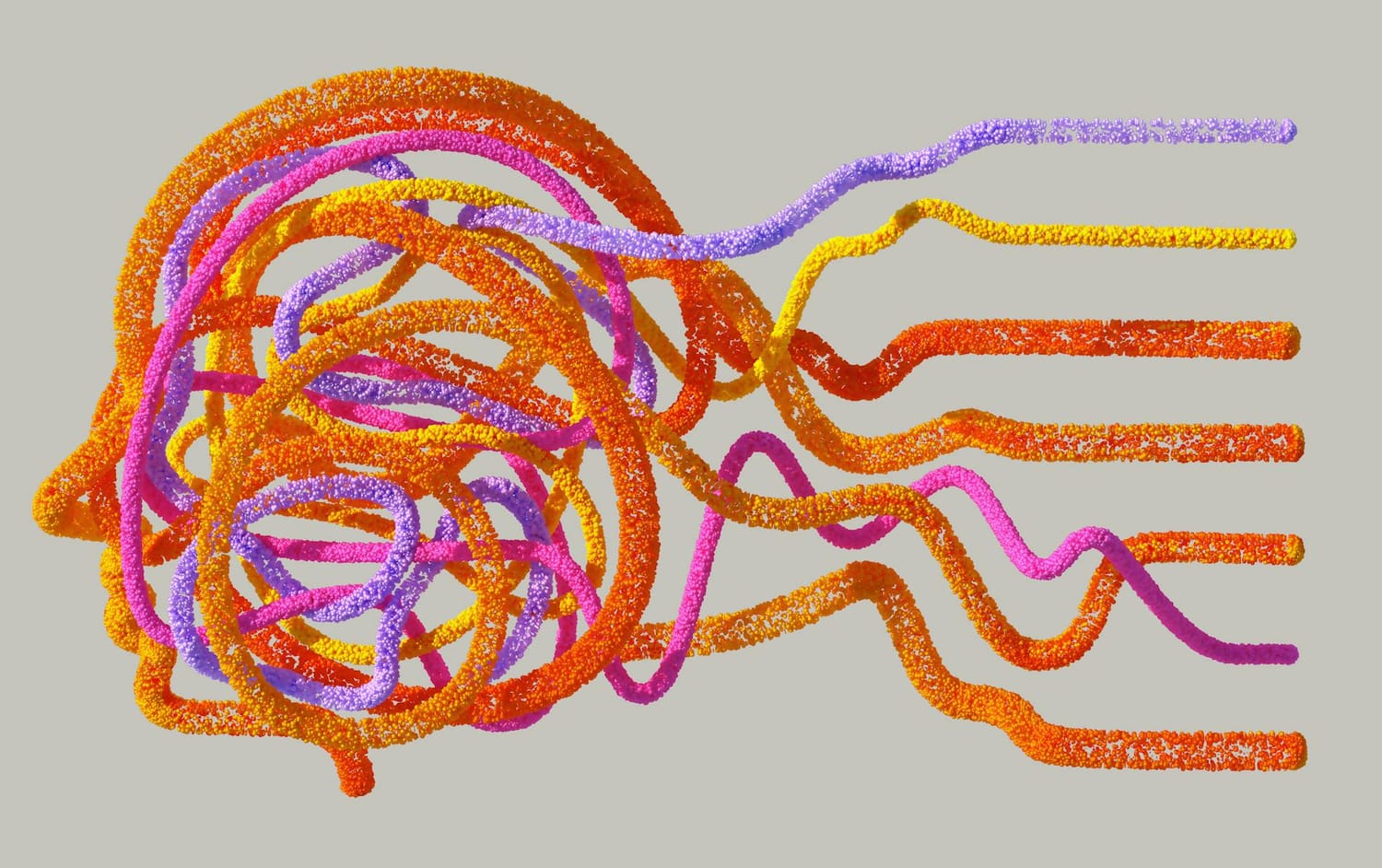
Source: Google DeepMind on Pexels.
2) “If it’s not hard, it doesn’t count.”
This one is sneaky because it can look like ambition.
What it can sound like:
“If I’m not struggling, I’m not growing.”
“Rest is for when I’ve earned it.”
What it can cost you:
burnout disguised as ‘drive’,
guilt when things go well,
a life that feels like constant effort...
3) “I should be grateful, so I shouldn’t want more.”
This belief is especially common among expats who know they’re privileged in some ways — and feel conflicted about naming what’s missing.
What it can sound like:
“I chose this, so I don’t get to complain.”
“Other people have it worse.”
What it can cost you:
emotional loneliness,
staying in situations that don’t fit,
silencing your own needs.
How beliefs and concepts work together (a simple model)
Here’s a helpful way to think about it:
Situation: Opportunity to speak up in a meeting.
Belief (default): “If I’m not perfect, I’ll lose credibility.”
Concepts available: “danger”, “risk”, “exposure” (vs “learning”, “participation”, “growth”).
Prediction: “This is risky.”
Emotion constructed: anxiety / shame / tension.
Behaviour: you over-explain, soften, or stay quiet next time.
Your emotion isn’t random. It’s your brain doing its job — based on the data it’s been given.
So the question becomes: is the belief still accurate? Or is it simply familiar?
Updating beliefs without self-blame
Beliefs don’t change through force or even sheer will.
They change through awareness, evidence, and repetition.
A gentle starting point is to work in two directions at once:
Upstream: identify the belief that’s shaping the prediction.
In-the-moment: expand your concepts (increase granularity) so your brain has more options than the default label.
Over time, this is how invisible defaults become visible — and then adjustable.
A kinder conclusion
If you recognised yourself in this, take a breath: you’re not ‘too sensitive’ or ‘not resilient enough’. You’re human — and your brain is doing what brains do.
The good news is: defaults can be updated!
For further support, you can also book a Discovery Call.
Follow me on Social Media:


Related Articles
Want tips, reflections & challenges for success and happiness?
Subscribe to the not-too-regular Seeds for Growth & Joy newsletters and stay engaged with tips, challenges, upcoming events and news.

Natália Leal | Coach & Trainer
Empowering Global Leaders and International Professionals to Upgrade Their Life & Career Abroad
Company no./KvK: 72490772
VAT/BTW-id: NL002528132B78
contact[at]natalia-leal.com
Pages



Copyright © Natália Leal, 2018-2026